 English
- English
-
 Español
-
 Português
-
 русский
-
 Français
-
 日本語
-
 Deutsch
-
 tiếng Việt
-
 Italiano
-
 Nederlands
-
 ภาษาไทย
-
 Polski
-
 한국어
-
 Svenska
-
 magyar
-
 Malay
-
 বাংলা ভাষার
-
 Dansk
-
 Suomi
-
 हिन्दी
-
 Pilipino
-
 Türkçe
-
 Gaeilge
-
 العربية
-
 Indonesia
-
 Norsk
-
 تمل
-
 český
-
 ελληνικά
-
 український
-
 Javanese
-
 فارسی
-
 தமிழ்
-
 తెలుగు
-
 नेपाली
-
 Burmese
-
 български
-
 ລາວ
-
 Latine
-
 Қазақша
-
 Euskal
-
 Azərbaycan
-
 Slovenský jazyk
-
 Македонски
-
 Lietuvos
-
 Eesti Keel
-
 Română
-
 Slovenski
-
 मराठी
-
 Srpski језик


How Are Large Diameter Wind Power Flanges Manufactured?
Engineering Guide
Article Summary: Large diameter wind power flanges are essential structural components that connect wind turbine tower sections and other major structural assemblies. Their dimensional accuracy, mechanical strength, material quality, and manufacturing consistency directly influence connection reliability and long-term operating performance. This article explains how large diameter wind power flanges are manufactured, covering material selection, forging processes, heat treatment, precision machining, quality inspection, and supplier evaluation. It also explores common purchasing challenges and practical considerations for wind energy equipment manufacturers and project procurement teams.
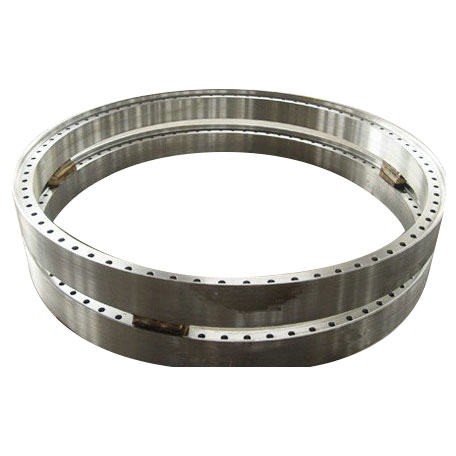
Table of Contents
- What Is a Large Diameter Wind Power Flange?
- Why Are Large Diameter Flanges Important?
- What Materials Are Used?
- How Are Large Diameter Wind Power Flanges Manufactured?
- What Quality Requirements Should Be Considered?
- What Challenges Affect Manufacturing?
- How Can Buyers Choose the Right Supplier?
- Why Does Customization Matter?
- How Can Proper Flange Selection Improve Project Performance?
- Why Choose Jiangyin Huaxi Flange Pipe Fittings Co., Ltd.?
- Frequently Asked Questions
1. What Is a Large Diameter Wind Power Flange?
A large diameter wind power flange is a heavy-duty circular connection component used in wind turbine structural systems. It is commonly installed between tower sections or between major structural assemblies to create a secure mechanical connection. Depending on the turbine design, flange components may also be used in foundation-related structures and offshore wind support systems.
Unlike conventional pipeline flanges, wind power flanges must accommodate substantial structural loads, including axial forces, bending moments, shear forces, and cyclic loading caused by changing wind conditions. They are generally manufactured with large dimensions and carefully controlled geometric features to ensure accurate assembly.
As wind turbines continue to increase in height and generating capacity, the demand for large and heavy structural components has also increased. This makes the manufacturing of large diameter wind power flanges more technically demanding, particularly in terms of forging quality, machining accuracy, material consistency, and production stability.
Key point: A wind power flange is not simply a large metal ring. It is an engineered structural connection component whose performance depends on the coordination of material properties, manufacturing processes, dimensional tolerances, and installation requirements.
Common Applications
- Wind turbine tower connections: Joining individual tower sections into a complete supporting structure.
- Onshore wind projects: Providing reliable connections for large wind turbine towers installed on land.
- Offshore wind structures: Supporting structural connections in demanding marine environments, subject to project-specific engineering requirements.
- Foundation-related assemblies: Connecting selected structural components in wind turbine support systems.
2. Why Are Large Diameter Flanges Important in Wind Power Systems?
Wind turbines operate under constantly changing environmental conditions. Wind speed, turbulence, temperature variations, and repeated loading can all affect the structural behavior of a turbine. As a result, every major connection must be designed and manufactured to meet specific mechanical and dimensional requirements.
2.1 Supporting Structural Loads
Wind turbine towers transfer loads from the nacelle and rotor to the foundation. Flanges connect tower sections while helping maintain the overall structural integrity of the assembly. Their design must account for the loads specified by the turbine manufacturer and structural engineering team.
2.2 Maintaining Connection Accuracy
Large diameter flanges require accurate bolt-hole positioning, flatness, parallelism, and overall dimensional control. If mating components do not fit properly, assembly can become difficult, and additional adjustment may be necessary. Accurate machining helps reduce these problems during installation.
2.3 Improving Long-Term Reliability
Wind turbines are expected to operate for many years, often under repeated cyclic loading. Material defects, dimensional deviations, and unsuitable manufacturing processes may contribute to premature component problems. Appropriate material selection and controlled production processes help reduce these risks.
2.4 Supporting Efficient Installation
Wind turbine components are large, heavy, and expensive to transport and install. Incorrect flange dimensions or bolt-hole alignment can delay construction and increase project costs. Reliable manufacturing helps ensure that components arrive ready for the intended assembly process.
3. What Materials Are Used for Large Diameter Wind Power Flanges?
Material selection is one of the most important decisions in wind power flange manufacturing. The selected material must provide the mechanical properties required by the engineering design while remaining suitable for the intended manufacturing process and service environment.
Carbon steel and selected low-alloy structural steels are commonly considered for wind turbine structural components. The exact grade should be determined by the approved drawings, applicable material specifications, operating temperature, and project requirements.
| Material Category | Typical Characteristics | Selection Considerations |
|---|---|---|
| Carbon Steel | Good strength, machinability, and manufacturing versatility. | Suitable grades and impact properties must be confirmed against design requirements. |
| Low-Alloy Steel | Can provide improved strength and toughness depending on the grade and heat treatment. | Consider service temperature, thickness, and mechanical property requirements. |
| Stainless Steel | Offers corrosion resistance in suitable environments. | Evaluate mechanical properties, cost, and compatibility with the application. |
| Duplex Stainless Steel | Combines high strength with good corrosion resistance in appropriate environments. | Usually selected for specific demanding applications rather than assumed as a universal wind tower material. |
Important Material Selection Factors
- Mechanical strength: The material must meet the required yield strength and tensile strength.
- Impact toughness: Low-temperature performance may be particularly important in cold-climate wind projects.
- Weldability: Where welding is involved, material chemistry and welding procedures should be reviewed.
- Heat treatment response: The material must be compatible with the specified thermal processing requirements.
- Traceability: Material certificates and heat numbers should be maintained throughout production.
Material grades should never be selected based only on price or general industry recommendations. Always confirm the approved grade and required properties with the engineering specification.
4. How Are Large Diameter Wind Power Flanges Manufactured?
Manufacturing a large diameter wind power flange involves several coordinated processes. Each stage affects the final component's strength, dimensional accuracy, and suitability for installation. A controlled production route is essential for maintaining consistent product quality.
Step 01. Raw Material Preparation
Production begins with selecting suitable steel billets or other approved raw materials. Suppliers should verify material specifications, chemical composition, and relevant mechanical properties before processing.
Incoming inspection helps prevent incorrect material grades, internal defects, and traceability problems from entering the production process. Each material batch should be properly identified and documented.
Step 02. Heating and Forging
The prepared steel is heated to an appropriate forging temperature and formed using heavy-duty forging equipment. Forging helps shape the material while improving its internal structure when the process is properly controlled.
For large ring-shaped components, open-die forging and ring rolling are important manufacturing methods. The forging route must be selected according to the product geometry, material, size, and engineering requirements.
Temperature control, deformation sequence, and forging reduction are important factors in achieving consistent material quality throughout the component.
Step 03. Ring Rolling and Forming
For ring-type wind power components, ring rolling can be used to produce the required diameter and cross-sectional profile. The process gradually expands the ring while controlling its dimensions and geometry.
Large ring mills are particularly important for this operation because they provide the capacity to process heavy ring forgings. Correct process control helps reduce dimensional variation and supports a more consistent product structure.
Step 04. Heat Treatment
After forging and forming, the component may undergo heat treatment according to the material specification. Depending on the approved manufacturing procedure, this may involve normalizing, quenching and tempering, or other specified thermal processes.
Heat treatment is intended to achieve the required mechanical properties and improve structural consistency. Temperature, holding time, cooling conditions, and furnace records should be controlled and documented.
Step 05. Rough Machining
Once the required thermal processing is completed, the flange moves to machining. Rough machining removes excess material and creates the basic geometry needed for subsequent precision operations.
Large vertical lathes are commonly used to process large circular workpieces. Stable clamping and appropriate machining allowances are important to reduce distortion and ensure sufficient material remains for finishing.
Step 06. Precision Machining and Drilling
Precision machining establishes the final flange dimensions and connection features. These may include the inner diameter, outer diameter, thickness, contact faces, and other drawing-specific details.
CNC drilling equipment can be used to machine bolt holes according to the specified bolt circle diameter, hole diameter, quantity, and positional requirements.
Dimensional inspection during this stage helps identify deviations before the product reaches final acceptance.
Step 07. Final Inspection and Documentation
After machining, the completed flange undergoes the inspections specified in the purchase order and technical documentation. These may include dimensional measurement, material verification, mechanical testing, and nondestructive examination.
Only products that satisfy the applicable acceptance criteria should be released for delivery. Inspection records provide buyers with evidence of manufacturing conformity and product traceability.
Manufacturing insight: The quality of a large diameter wind power flange is determined by the entire production chain. Excellent machining cannot compensate for unsuitable raw materials or poor forging quality. Each process must be properly planned and controlled.
5. What Quality Requirements Should Be Considered?
Quality control is particularly important for large diameter wind power flanges because defects or dimensional deviations can affect structural connections and project installation schedules. Buyers should evaluate both the manufacturer's production controls and the inspection records provided for each order.
5.1 Dimensional Inspection
Dimensional accuracy is essential for proper mating and assembly. Typical inspection items include:
- Outside diameter and inside diameter.
- Overall thickness and sectional dimensions.
- Bolt-hole diameter and quantity.
- Bolt circle diameter and hole positioning.
- Flatness and parallelism of relevant faces.
- Concentricity and other drawing-defined geometric tolerances.
5.2 Mechanical Property Testing
Mechanical testing helps verify whether the material meets the required performance specifications. Depending on the order, testing may include tensile strength, yield strength, elongation, impact toughness, and hardness.
5.3 Nondestructive Testing
Nondestructive testing can help identify defects without damaging the finished component. The appropriate method depends on the material, product geometry, manufacturing process, and inspection specification.
| Inspection Method | Main Purpose | Application Consideration |
|---|---|---|
| Ultrasonic Testing (UT) | Detecting internal discontinuities. | Useful for evaluating internal material integrity where required. |
| Magnetic Particle Testing (MT) | Identifying surface and near-surface discontinuities. | Applicable to suitable ferromagnetic materials. |
| Liquid Penetrant Testing (PT) | Detecting surface-breaking discontinuities. | Suitable for many nonporous metallic surfaces. |
| Visual Inspection (VT) | Checking visible surface conditions and workmanship. | Should be performed alongside other specified inspections. |
5.4 Material Traceability and Documentation
Reliable traceability allows buyers to connect the finished flange with its original material batch and manufacturing records. Depending on the contract, the documentation package may include:
- Material test certificates.
- Heat treatment records.
- Mechanical testing reports.
- Nondestructive testing reports.
- Dimensional inspection reports.
- Product identification and traceability records.
Buyers should define the required inspection scope, acceptance criteria, and documentation format before production begins. This helps avoid disagreements during final inspection and shipment.
6. What Challenges Affect Large Diameter Wind Power Flange Manufacturing?
Manufacturing large structural flanges presents challenges that are not usually encountered with smaller standard flange products. Understanding these issues helps buyers evaluate production capabilities and identify potential project risks.
6.1 Maintaining Dimensional Stability
Large components can experience deformation during forging, heat treatment, and machining. Uneven temperature distribution, residual stress, and improper machining sequences may affect final geometry.
Manufacturers need appropriate process planning, equipment capacity, and intermediate inspections to control these risks.
6.2 Controlling Internal Material Quality
Heavy steel sections require careful control of material quality throughout forging and thermal processing. Internal discontinuities or inconsistent mechanical properties can create problems during subsequent manufacturing and service.
Suitable raw material selection, controlled forging practices, and specified nondestructive examination are important measures for reducing these risks.
6.3 Achieving Accurate Bolt-Hole Positioning
Large flanges often contain multiple bolt holes arranged around a circular pattern. Small positional deviations can complicate installation, especially when several tower sections must be connected on site.
Accurate CNC drilling, reliable measurement equipment, and clear drawing requirements help maintain the required hole pattern.
6.4 Managing Production and Delivery Schedules
Large diameter flange manufacturing involves multiple stages, heavy equipment, and potentially long inspection procedures. Delays in raw material procurement, heat treatment, machining, or customer approval can affect the delivery schedule.
Buyers should discuss production planning, inspection milestones, packaging, and transportation arrangements at the beginning of the project.
7. How Can Buyers Choose the Right Large Diameter Wind Power Flange Supplier?
Selecting a supplier involves more than comparing unit prices. A suitable manufacturer should have the production capacity, technical understanding, quality management procedures, and communication capabilities needed to support the specific project.
7.1 Evaluate Manufacturing Equipment
Check whether the supplier has suitable forging presses, ring rolling mills, heat treatment facilities, large-scale machining equipment, and drilling machines. Equipment capacity should match the required component dimensions and weight.
7.2 Review Relevant Manufacturing Experience
Ask about the supplier's experience with large ring forgings, wind power flanges, and other heavy industrial components. Previous experience with comparable products can help demonstrate familiarity with manufacturing challenges.
7.3 Confirm Quality Management Capabilities
Review relevant quality certifications, inspection procedures, testing capabilities, and traceability arrangements. More importantly, verify whether the supplier can meet the specific inspection and documentation requirements of your project.
7.4 Check Customization and Engineering Support
Wind turbine projects may require special dimensions, material grades, machining details, or non-standard configurations. A supplier should be able to review technical drawings and confirm manufacturing feasibility before accepting an order.
7.5 Compare the Complete Supply Cost
The lowest quotation does not necessarily represent the best purchasing decision. Buyers should consider material quality, manufacturing processes, inspection scope, delivery reliability, packaging, and transportation costs.
| Evaluation Factor | Questions Buyers Should Ask |
|---|---|
| Production Capacity | Can the factory manufacture the required diameter, thickness, and weight? |
| Technical Capability | Can the manufacturer process drawings and meet special tolerances? |
| Material Control | Are material certificates and batch traceability available? |
| Inspection | Can the supplier provide the required testing and inspection reports? |
| Delivery | Can production and shipping schedules meet the project timeline? |
| Communication | Can technical and commercial questions be handled efficiently? |
8. Why Does Customization Matter for Large Diameter Wind Power Flanges?
Not every wind turbine project uses the same structural configuration. Tower height, turbine capacity, structural design, connection requirements, and installation conditions can all influence flange specifications.
Standard products may be suitable for certain applications, but large-scale wind energy projects frequently require customized components manufactured according to engineering drawings.
Common Customization Requirements
- Customized dimensions: Special outside diameters, inside diameters, thicknesses, and profiles.
- Material specifications: Specific steel grades and mechanical property requirements.
- Bolt-hole configurations: Customized hole quantity, diameter, spacing, and bolt circle dimensions.
- Machining requirements: Special contact surfaces, grooves, and other drawing-defined features.
- Inspection requirements: Project-specific testing, documentation, and acceptance procedures.
What Should Buyers Provide for a Customized Quotation?
To help a manufacturer evaluate feasibility and prepare an accurate quotation, buyers should provide as much technical information as possible.
- Complete product drawings in PDF, DWG, or another agreed format.
- Required material grade and applicable material standard.
- Outside diameter, inside diameter, thickness, and other key dimensions.
- Bolt-hole layout and dimensional tolerances.
- Required forging and heat treatment conditions.
- Inspection, testing, and documentation requirements.
- Order quantity, delivery destination, and expected delivery date.
Procurement tip: Providing complete technical drawings at the quotation stage helps reduce misunderstandings, improve manufacturing planning, and avoid unnecessary revisions after production begins.
9. How Can Proper Flange Selection Improve Project Performance?
Choosing the correct large diameter wind power flange can influence project efficiency throughout manufacturing, transportation, installation, and operation. A well-planned purchasing decision helps reduce technical uncertainty and improves coordination between equipment manufacturers, engineering teams, and component suppliers.
Reduce Installation Problems
Accurate dimensions and bolt-hole positioning help mating components fit according to the approved design. This can reduce on-site adjustment and prevent avoidable installation delays.
Improve Manufacturing Consistency
Working with a manufacturer that maintains controlled production procedures can help ensure that components within the same order meet consistent technical requirements.
Support Project Cost Control
Proper material selection, clear specifications, and appropriate inspection planning can help prevent expensive rework, rejected products, and schedule disruptions.
Strengthen Supply Chain Reliability
Reliable suppliers with suitable equipment and production planning capabilities can provide better support for repeated orders and long-term wind energy projects.
10. Why Choose Jiangyin Huaxi Flange Pipe Fittings Co., Ltd.?
For buyers sourcing large diameter wind power flanges and other heavy-duty flange products, manufacturing experience and production equipment are important factors. Jiangyin Huaxi Flange Pipe Fittings Co., Ltd. specializes in flanges, ring forgings, and pipe fittings, serving industrial customers with a broad range of manufacturing requirements.
Founded in 1984, the company has developed its production capabilities through investment in forging, ring rolling, heat treatment, and machining equipment. Its manufacturing experience provides a foundation for supplying large-scale forged components and customized flange products.
10.1 Advanced Production Equipment
The company's production equipment includes:
- 3,600-ton oil hydraulic presses for heavy forging operations.
- 5-meter ring rolling mills for large ring-type forgings.
- 8-ton and 5-ton electro-hydraulic hammers.
- 2–5-meter vertical lathes for large-component machining.
- 5-meter CNC drilling machines.
- Heat treatment furnaces for controlled thermal processing.
These facilities support the production of various ring forgings, flanges, and pipe fittings, including products for wind power applications.
10.2 Broad Material and Product Capabilities
Jiangyin Huaxi Flange Pipe Fittings Co., Ltd. manufactures products in different material categories, including carbon steel, stainless steel, alloy steel, and duplex steel. The company offers a wide range of specifications and can manufacture non-standard flanges and ring forgings according to customer drawings or samples.
10.3 Experience in International Markets
The company has supplied products to customers in multiple international markets. Its manufacturing scope covers various domestic and international standards, including JIS, ANSI, EN, DIN, BS, and GB, subject to the product specification and order requirements.
10.4 Quality Management and Inspection
Quality control is an important part of the company's manufacturing operations. Its quality management system and inspection capabilities support product verification throughout the production process. The company has reported ISO 9001 and PED-related certification achievements, along with other industry qualifications.
10.5 Customized Manufacturing Support
For buyers with non-standard requirements, the company can manufacture ring forgings, flanges, and pipe fittings based on supplied drawings or samples. This provides flexibility for wind power projects that require specific dimensions, materials, or machining configurations.
Looking for a reliable large diameter wind power flange manufacturer?
Jiangyin Huaxi Flange Pipe Fittings Co., Ltd. combines decades of manufacturing experience with large-scale forging, ring rolling, and machining equipment. Buyers can submit technical drawings and project requirements for manufacturing feasibility assessment and quotation.
11. Frequently Asked Questions About Large Diameter Wind Power Flanges
Q1. What is the main function of a large diameter wind power flange?
A large diameter wind power flange provides a structural connection between major wind turbine components, particularly tower sections. It helps transfer specified structural loads and maintain connection alignment according to the turbine design.
Q2. What materials are commonly used for wind power flanges?
Carbon steel and low-alloy structural steel are commonly considered for wind power structural flanges. Stainless steel and duplex stainless steel may be selected for certain specialized applications. The final material must meet the project's approved technical specification.
Q3. How are large diameter wind power flanges manufactured?
The typical manufacturing route includes raw material preparation, heating, forging, ring rolling where applicable, heat treatment, rough machining, precision machining, drilling, and final inspection. The exact process depends on the design and material requirements.
Q4. Why is ring rolling important in large flange production?
Ring rolling helps produce large annular components with controlled geometry. When properly performed, the process can support consistent material structure and reduce the need for extensive material removal compared with machining a ring from a much larger solid block.
Q5. What inspections are required for large diameter wind power flanges?
Inspection requirements depend on the project specification. They may include dimensional checks, chemical composition verification, mechanical testing, ultrasonic testing, magnetic particle testing, liquid penetrant testing, and visual inspection.
Q6. Can large diameter wind power flanges be customized?
Yes. Manufacturers can produce customized flanges according to approved drawings or samples. Common customization items include material grade, diameter, thickness, bolt-hole pattern, machining details, and inspection requirements.
Q7. What information is needed to request a quotation?
Buyers should provide product drawings, material specifications, key dimensions, tolerances, bolt-hole details, required testing, order quantity, and delivery information. More complete technical information helps manufacturers prepare more accurate quotations.
Q8. How do large diameter wind power flanges differ from standard pipeline flanges?
Wind power flanges are generally designed for structural connections and must satisfy specific load-bearing and fatigue-related engineering requirements. Standard pipeline flanges are primarily designed for connecting piping systems and maintaining pressure-containing joints. Their design and qualification requirements are therefore different.
Q9. Why is precision machining important for wind power flanges?
Precision machining ensures that critical dimensions, mating surfaces, and bolt-hole positions conform to approved drawings. This supports accurate assembly and helps reduce installation difficulties.
Q10. How can buyers evaluate a large diameter wind power flange manufacturer?
Buyers should examine manufacturing equipment, forging and machining capacity, relevant experience, material traceability, quality management, inspection capabilities, customization support, and delivery performance.
Looking for a Reliable Large Diameter Wind Power Flange Manufacturer?
Choosing the right flange manufacturer is an important step in building reliable wind energy equipment. From material selection and ring forging to precision machining and customized production, every detail matters.
Jiangyin Huaxi Flange Pipe Fittings Co., Ltd. provides flange, ring forging, and pipe fitting manufacturing services for industrial customers worldwide.
Have a project drawing, technical specification, or bulk purchasing requirement? Contact us today to discuss your requirements and request a customized quotation.
Contact Us for a QuotationSend Inquiry



X
We use cookies to offer you a better browsing experience, analyze site traffic and personalize content. By using this site, you agree to our use of cookies.
Privacy Policy